COMPACT CONSTRUCTION
Compact Construction
Integral DBB Valves
Compare integral DBB construction when installed length and reduction of external joints are the main design drivers.
Compact DBB body
View collection →Two-Ball DBB Isolation
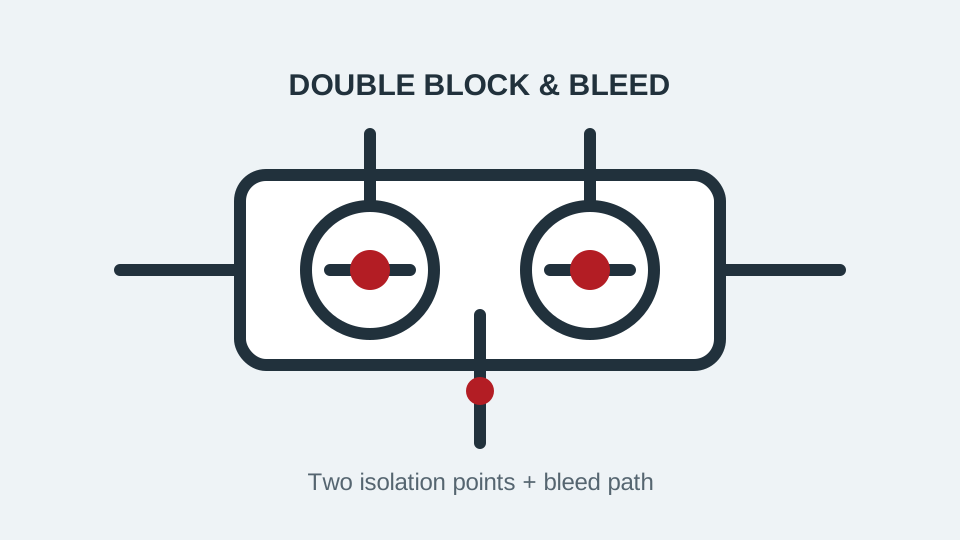
Double ball DBB valves use two separate ball closure elements in one assembly with a bleed or vent point between them. This page is for buyers who specifically need a two-ball architecture, rather than a generic DBB label, and need to define how each ball, seat and cavity should behave in service.
Related Collections
Use the related collection pages to keep valve architecture, installation function and buyer intent separate.
Compact Construction
Compare integral DBB construction when installed length and reduction of external joints are the main design drivers.
Compact DBB body
View collection →Ball Support
For pipeline duties, compare trunnion-mounted DBB architecture and seat/cavity pressure requirements.
Trunnion DBB
View collection →Parent Collection
Return to the full DBB family to compare instrument and monoflange designs as well.
All DBB families
View collection →Buyer Selection Matrix
| Ball support | Specify floating or trunnion-supported ball construction where required; do not leave the support concept ambiguous. |
|---|---|
| Operator independence | Confirm whether each isolation ball needs a separate lever, gear or actuator and the required operating sequence. |
| Intermediate cavity | Define the bleed / vent connection and how trapped pressure between the two balls is handled. |
| Seat arrangement | State seat materials, sealing direction / philosophy and any project requirement for upstream/downstream isolation. |
| Bore and pigging | If the line must be piggable, state the full-bore requirement and dimensional restrictions in the RFQ. |
Selection Logic
Two ball closures make the isolation arrangement physically obvious: one closure on each side of an intermediate cavity that can be bled or vented. But the performance still depends on ball support, seat design, cavity relief, bore, operator configuration and test criteria. Those details should be written into the datasheet instead of assumed from the product name.
Project Application
Provide size, class, design code if specified, full/reduced bore, floating or trunnion preference, body and trim materials, seat material, end connections, bleed connection, operation, flow direction if relevant, service pressure/temperature and test/document requirements. For automated units, add actuator fail position, power source, controls and accessories.
For final selection, use the project valve specification, piping class, instrument hook-up drawing or approved datasheet as the controlling document.
Factory & Quality Evidence
Buyers can review YINKE VALVE factory information, quality documents, sample inspection records and project references before technical and commercial confirmation.
Buyer Questions
No. Double ball describes the number of ball closure elements. The support design should be specified separately.
It provides a defined point to depressurize, drain or verify the cavity between the two isolation closures, subject to the project operating procedure.
Yes, full-bore configurations are possible, but the RFQ should explicitly state the bore requirement and any pigging or pressure-drop constraint.
RFQ Checklist
Technical data is confirmed against the final quotation, approved drawings and project specification.
Send the valve list, datasheet, P&ID or instrument hook-up drawing for technical and commercial review.